Chinatown
Chinatown / Air Duct Care
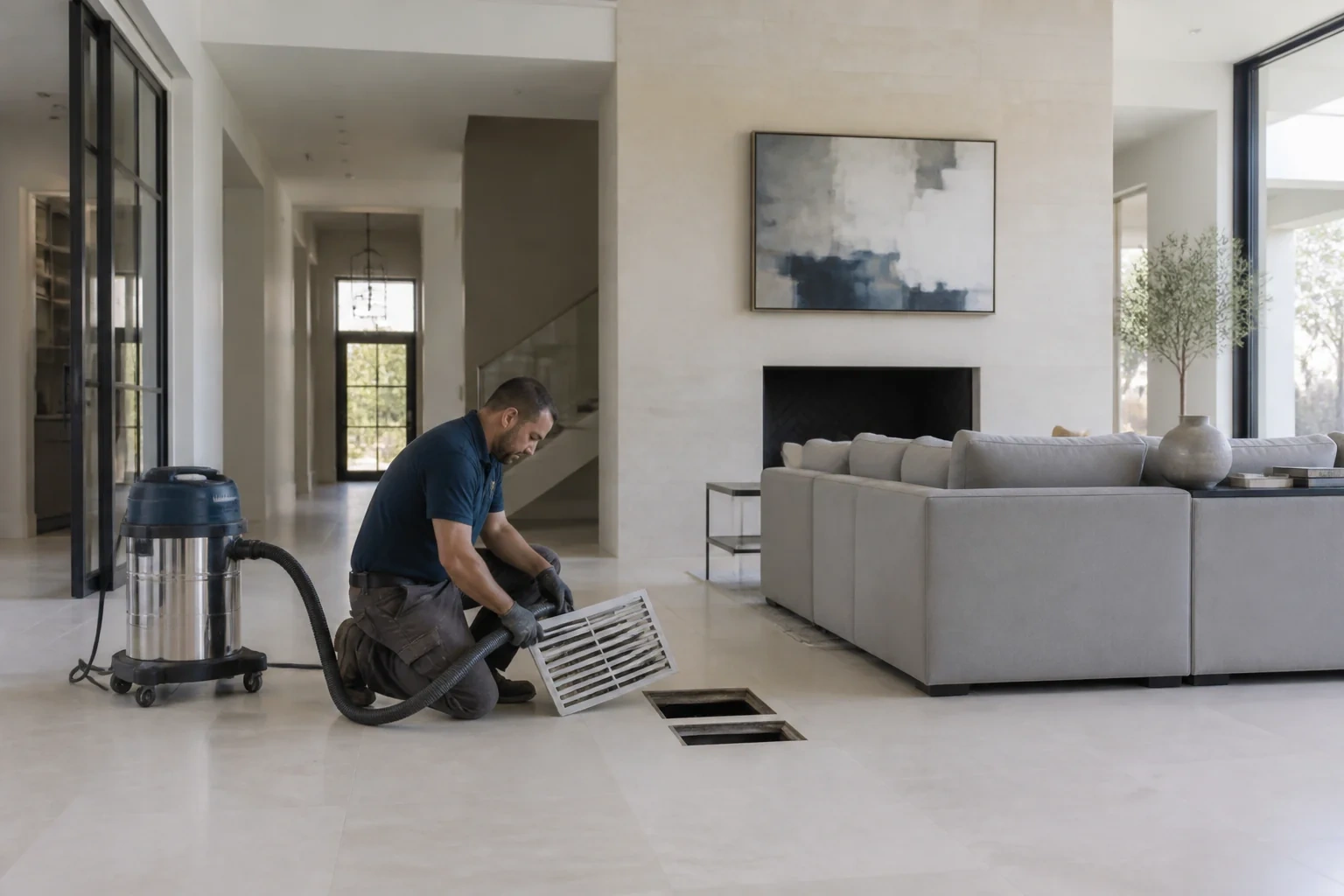
Return Duct Cleaning in Chinatown
Excessive debris is documented in return-side ductwork beyond normal dust on a return grille.
The short answer
Ask which return runs have documented contamination and which grille or connection work is included. EPA notes that ordinary dust on a return grille does not establish heavily contaminated ducts. Request the proposed collection approach, material precautions and completion record for the selected components.
The symptom
Excessive debris is documented in return-side ductwork beyond normal dust on a return grille.
The proposed method
Ask which return runs have documented contamination and which grille or connection work is included. EPA notes that ordinary dust on a return grille does not establish heavily contaminated ducts. Request the proposed collection approach, material precautions and completion record for the selected components.
Items to discuss
return ducts, return grilles, vacuum collection, access openings. Clarify which parts or materials would be supplied, which tools would be used, and what documentation is included.
What shapes the quote?
Return-side scope
List the return runs, grilles and connections included in the proposal.
Method and materials
Ask how the proposed collection and agitation approach suits the identified construction.
Excluded work
Record inaccessible sections and any grille, fastening or other repairs quoted separately.
Ask for a written quote and confirm the complete charge before work begins.
Property context in Chinatown
The area rebuilt on its original site after 1906, and some buildings reused original brick; its historic fabric includes many early post-earthquake structures.
Source for building history ↗The Chinatown Area Plan describes predominantly low, small-scale buildings, with many buildings relatively short in depth because of the lot pattern. This describes the district’s built form, not the equipment or condition of an individual property.
Source for housing context ↗The City identifies Chinatown as comparatively sunny and sheltered from wind, rather than treating it as a typical fog-exposed district.
Source for local exposure ↗The plan records more than 250 historically or architecturally important early post-earthquake buildings, so preservation-sensitive work is a realistic consideration.
Source for local context ↗Area-wide context is not a finding about your own property.
Useful references
EPA · when to consider duct cleaning ↗General guidance. Confirm the scope for your property.
Before you decide
Good questions.
Clearer next steps.
What does return duct cleaning involve?
Ask which return runs have documented contamination and which grille or connection work is included. EPA notes that ordinary dust on a return grille does not establish heavily contaminated ducts. Request the proposed collection approach, material precautions and completion record for the selected components.
What should the proposal say about parts, materials and equipment?
Discuss return ducts, return grilles, vacuum collection, access openings. Ask the provider to distinguish existing parts to inspect, proposed replacements, and tools, materials or reports included in the service. Request a reason for any replacement and confirm compatibility with your equipment. A list of possible items does not mean that every item must be supplied or replaced.
Does every home need routine duct cleaning?
A concern should start with an assessment of observed conditions. Visible debris, moisture, pests or another specific issue can justify a closer look, but a cleaning schedule alone does not establish that work is needed. Ask what was found and which parts of the system the proposal addresses.
What is included in a duct-cleaning proposal?
Ask which supply and return sections, registers and accessible equipment are included, how access is obtained and how loosened debris is collected. Clarify exclusions, access limitations and any separate work on the air handler. A quote for vents alone may describe a different scope from a whole-system proposal.
Can an odor be traced to the ducts from a phone call?
An odor description helps prepare the visit but does not establish its source. Explain where and when you notice it and whether it changes with system operation. Ask how the assessment will distinguish duct conditions from other possible sources before agreeing to cleaning or treatment.
What evidence should I ask for before approving work?
Request photographs or documented observations of the relevant accessible areas and a clear explanation of the proposed scope. Ask which findings were directly observed and which areas could not be accessed. Generic sample images are not evidence of your own system’s condition.
How do I prepare for a duct-system assessment?
Identify the air-handler location, note the number of systems if known and explain any access restrictions. Keep access to registers and equipment clear. Gather previous work records and describe the particular concern so the visit can focus on useful observations.
Photo gallery
Air ducts or vents?
Tell us about your system and we will call you back.